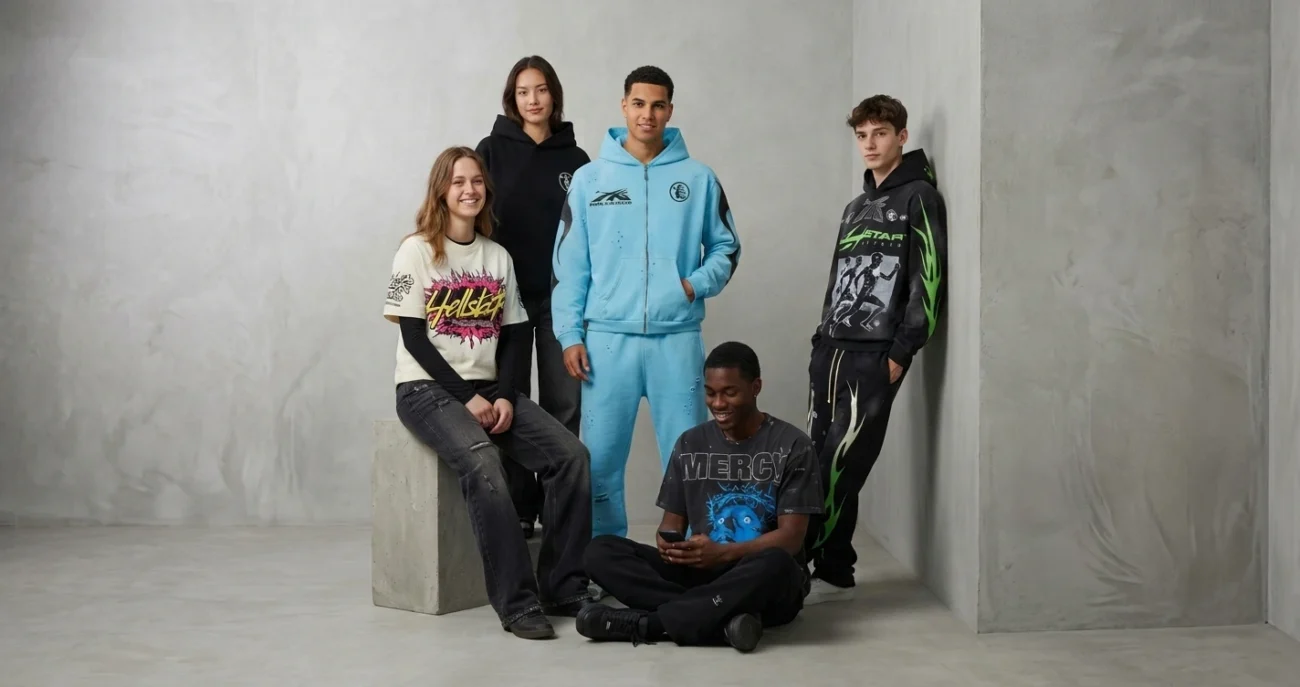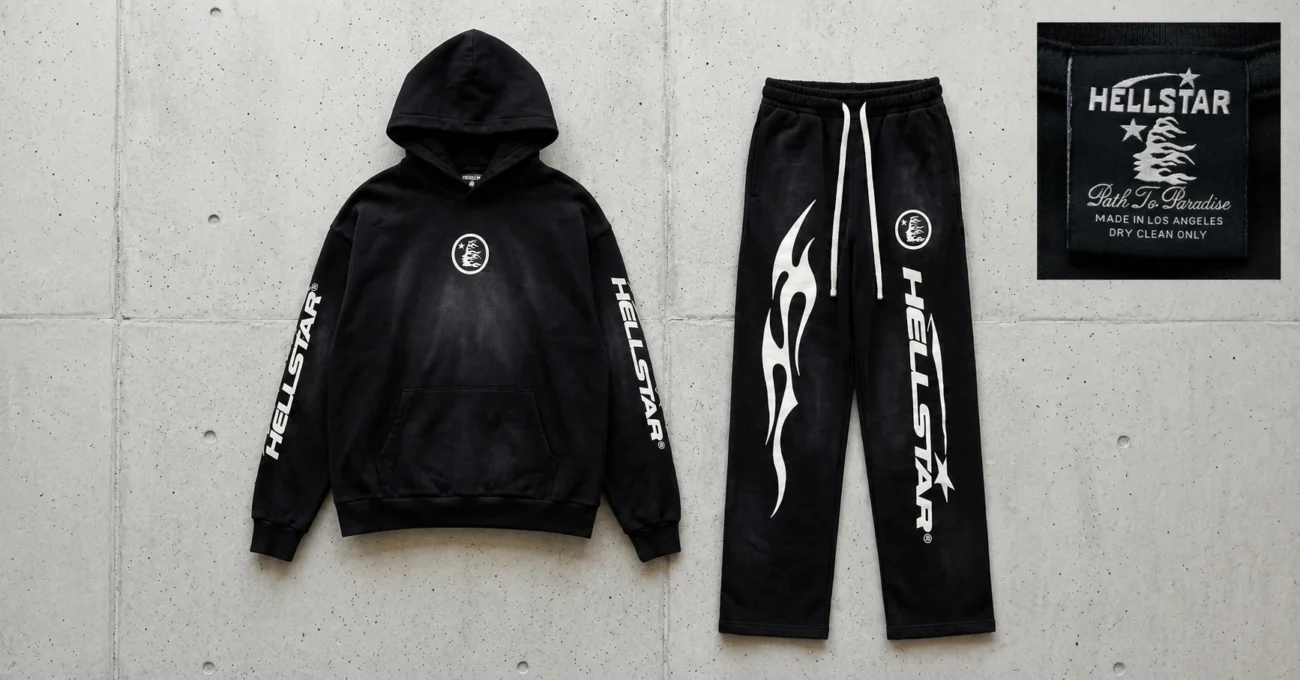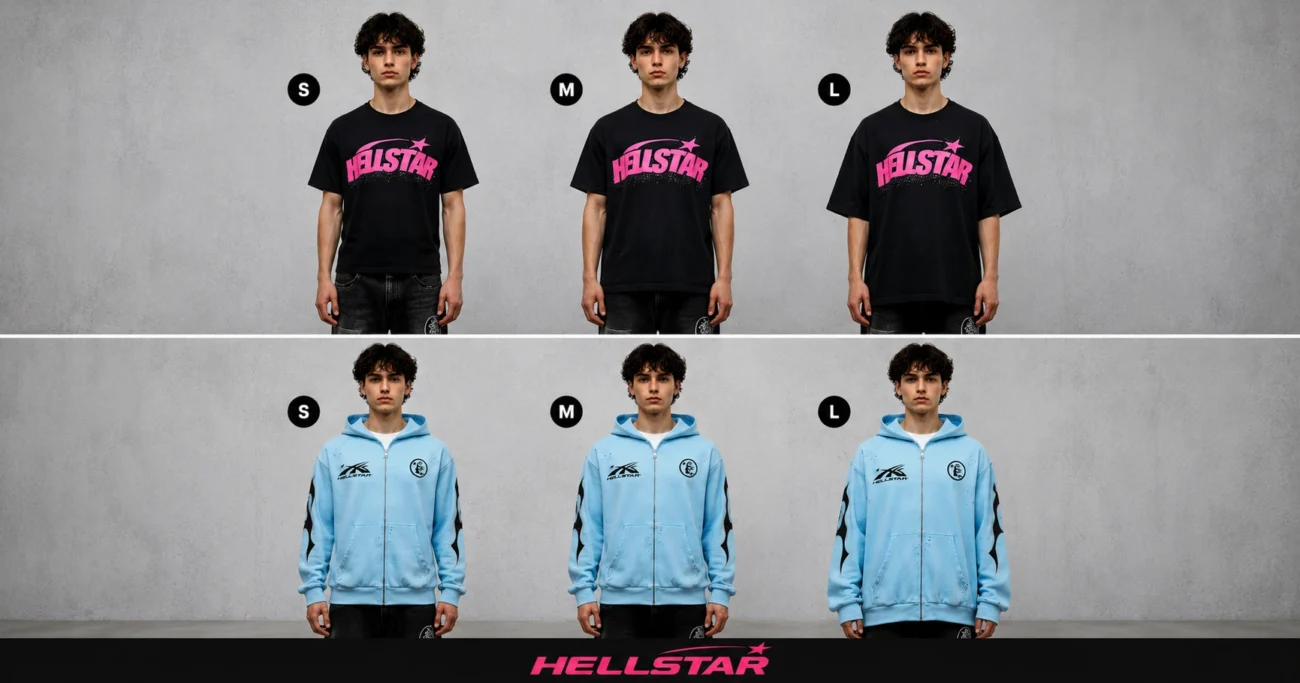

Streetwear is no longer built around one universal look. Some brands focus on clean silhouettes and subtle branding, while others lean into skate culture, luxury influences, vintage graphics, or highly recognizable logos. Hellstar streetwear occupies a more expressive position within that landscape.
Its appeal comes from the combination of bold graphics, relaxed silhouettes, strong visual themes, and a drop-driven approach to clothing. Instead of trying to make every piece blend easily into a wardrobe, Hellstar often creates garments that are intended to become the main focus of an outfit.
That does not necessarily make Hellstar “better” than other streetwear brands. The more useful question is what makes its approach different?
Looking at Hellstar alongside brands such as Stüssy, Supreme, Represent, and other graphic-led streetwear labels makes those differences easier to understand. Each brand has its own history, design language, audience, and way of turning clothing into a form of identity.
What Is Hellstar Streetwear Known For?
Hellstar has developed a recognizable visual identity around graphic-heavy clothing, relaxed proportions, and recurring themes involving flames, stars, spiritual imagery, typography, and darker visual elements.
The brand’s official collections show how broad that identity has become. Its current collection structure includes categories such as Studios, Capsule, Hellstar Records, Sports, Hoodies , Tracksuits, Long Sleeves, T-Shirts, Bottoms, Shorts, Hats, Tank Tops and Accessories.
This is important because Hellstar is not simply a hoodie brand.
Hoodies and graphic T-shirts may be among the most recognizable pieces, but the wider range includes sweatpants, shorts, jackets, hats, accessories, and sports-related clothing. That gives customers more ways to build a complete Hellstar outfit rather than relying on a single statement piece.
The visual language remains consistent across many of these categories. Large graphics, strong contrasts, recognizable symbols, and relaxed silhouettes help different pieces feel connected. This creates one of Hellstar’s biggest strengths: you can often recognize the design direction before you even see the brand name.
Hellstar vs. Other Streetwear Brands: The Biggest Difference

Comparing Hellstar with other brands is useful, but it should not be treated as a competition where one brand automatically wins. Streetwear is highly personal, and someone who prefers understated clothing may find a minimalist brand more appealing, while someone who wants oversized graphics and a stronger visual presence may naturally gravitate toward Hellstar.
The main difference is how much visual identity Hellstar puts into the garment itself. Some streetwear brands can be identified through a small logo, a familiar silhouette, or a long-established cultural symbol. Hellstar often takes the opposite approach, where the artwork becomes a major part of the garment.
That distinction affects everything from styling to how individual pieces are worn. A simple logo hoodie can work as one part of an outfit, while a heavily graphic Hellstar hoodie can become the outfit’s focal point.
That is why comparing Hellstar with other streetwear brands is less about determining which one is superior and more about understanding different approaches to modern streetwear.
Hellstar vs. Stüssy: New-Age Graphics vs. Streetwear Heritage
Stüssy is one of the most influential names in streetwear history, with roots going back decades. Its visual identity has developed through surf, skate, music, art, and broader youth culture. Stüssy’s own archive shows how important graphic T-shirts have been to its identity. The brand’s famous World Tour T-shirt, for example, dates back to 1989 and used a combination of city names and contrasting typography to represent different parts of global street culture.
This gives Stüssy a very different type of strength. Its identity is deeply connected to streetwear heritage and cultural history. Hellstar, by comparison, feels much more like a contemporary graphic statement. Its designs frequently use dramatic imagery, larger artwork, celestial references, flames, and darker themes.
The difference can be summarized simply:
Stüssy: heritage, culture, graphics, skate and surf influence.
Hellstar: contemporary graphics, dramatic themes, oversized presentation, and a stronger statement aesthetic.
Neither approach is necessarily better. Someone building a wardrobe around classic streetwear may prefer Stüssy’s versatility and history, while someone who wants a newer, more visually aggressive aesthetic may prefer Hellstar.
This difference also affects styling. A Stüssy graphic tee can easily sit underneath a jacket, work with denim, or become part of a simple everyday outfit. A Hellstar graphic piece can be styled similarly, but its artwork often demands more attention.
Hellstar vs. Supreme: Identity Through Graphics and Drops
Supreme represents another important comparison. Supreme’s identity has historically been connected to skateboarding, New York culture, collaborations, recognizable branding, and limited releases. Its cultural impact comes partly from the strength of its logo and the ecosystem surrounding the brand.
Hellstar operates in a different visual direction. Rather than relying primarily on one instantly recognizable box-style logo, Hellstar frequently builds its identity through artwork across the garment. A Hellstar piece can contain multiple visual elements, including typography, stars, flames, figures, illustrations, distressed treatments, and large back graphics. This makes the clothing itself more visually complex.
Supreme can often achieve recognition through relatively simple branding, while Hellstar frequently achieves recognition through the overall graphic composition. That difference is particularly noticeable when looking at hoodies and T-shirts.
A Supreme hoodie can be relatively simple while still being immediately identifiable. A Hellstar hoodie is often designed to communicate much more through the artwork itself.
The two brands therefore demonstrate two different ways of creating recognition in streetwear:
Supreme: strong brand symbolism and cultural recognition.
Hellstar: strong visual storytelling and graphic identity.
Both approaches rely on scarcity and cultural relevance, but the clothing communicates that identity differently.
Hellstar vs. Represent: Graphic Streetwear vs. Refined Luxury Influence
Represent provides another interesting comparison because it approaches streetwear through a more refined, luxury-influenced lens. Represent was founded in Manchester in 2011 by brothers George and Mike Heaton and has expanded from early graphic clothing into a broader fashion business covering menswear, womenswear, and its 247 performance line.
Compared with Hellstar, Represent often places greater emphasis on refined silhouettes, elevated basics, footwear, tailoring influences, and a polished overall wardrobe. Hellstar is generally more immediate visually, where a large Hellstar graphic can dominate the look. Represent pieces can often function as building blocks within a larger outfit.
This makes the two useful examples of how modern streetwear has expanded in different directions. Hellstar keeps a stronger connection to the statement graphic, while Represent combines streetwear with elements of contemporary luxury fashion.
For shoppers, the choice comes down to the type of wardrobe they want. If you want your clothing to make the statement, Hellstar can fit naturally into that style. If you prefer a more controlled wardrobe where fit, proportion, materials, and subtle branding carry more of the look, a brand such as Represent may feel more natural.
Hellstar’s Graphic Language Is a Major Part of Its Identity
One of the clearest differences between Hellstar and many other streetwear labels is the consistency of its graphic language. The brand frequently works with motifs that create a recognizable atmosphere rather than simply placing a logo on a blank garment. Stars, flames, celestial imagery, gothic-influenced typography, religious references, sports-inspired graphics, and distressed treatments appear across different pieces and collections, creating a visual world around the brand.
The graphic is not simply decoration; it becomes part of the identity of the garment. This is particularly noticeable in Hellstar hoodies and sweatshirts, where large front or back graphics can change the entire appearance of the silhouette. The same principle extends into T-shirts, sweatpants, shorts, jackets, and accessories.
The result is a wardrobe that can feel coordinated even when individual pieces come from different releases.
Why Hellstar Hoodies Stand Out
The hoodie is one of the strongest examples of Hellstar’s design philosophy. Instead of treating a hoodie as simply a basic layer, Hellstar frequently uses it as a large canvas for artwork. The combination of an oversized or relaxed silhouette with a prominent graphic creates a very different visual effect from a traditional logo sweatshirt.
The proportions matter as well. A larger body, dropped shoulders, longer sleeves, and substantial-looking fabric can give the hoodie a heavier streetwear presence. This is one reason Hellstar hoodies are often used as the starting point for an outfit. A hoodie can establish the entire visual direction, while simpler pants and footwear balance the look.
The brand’s official collection also places hoodies and crewnecks alongside multiple other categories, reinforcing the idea that these pieces are part of a broader clothing system rather than isolated products.
Hellstar T-Shirts Take a Different Approach to Everyday Streetwear
T-Shirts are another important part of Hellstar streetwear. Compared with hoodies, they are easier to wear throughout the year and can be layered underneath jackets, overshirts, or hoodies. However, Hellstar T-shirts often maintain the same graphic-first approach, where large artwork, strong typography, and distinctive imagery can turn a simple T-shirt into the focal point of an outfit.
This is where Hellstar differs from minimalist streetwear. A plain or lightly branded T-shirt can disappear into an outfit, while a graphic Hellstar T-shirt is usually intended to be noticed. That makes styling important. If the T-shirt already contains a large graphic, pairing it with relatively simple bottoms can prevent the outfit from becoming visually crowded.
Hellstar Sweatpants and Shorts Complete the Look
Another difference becomes visible when looking beyond tops. Hellstar’s collection structure includes bottoms and sports-focused categories, meaning the brand can be worn as a coordinated head-to-toe look. Sweatpants can carry the same graphic language as hoodies and T-shirts, creating matching or complementary outfits. This is particularly useful for people who prefer coordinated streetwear sets.
Shorts provide a lighter alternative while maintaining the same overall aesthetic. This broader product range matters because modern streetwear is increasingly about the complete outfit, not simply one branded item. A graphic hoodie with unrelated pants can create one type of look, while a matching Hellstar hoodie and sweatpants set creates another.
The difference is subtle but important: the brand’s visual identity can continue from the upper body to the lower body.
Hellstar’s Capsule and Limited-Release Appeal
Limited availability has always been a big part of streetwear culture. Hellstar’s official website currently organizes products into capsule collections and identifies certain capsule pieces as exclusive to their respective capsule, with some listed as sold out. This creates a different shopping experience from conventional retail. Instead of assuming a product will remain available indefinitely, customers may have to pay attention to releases. That limited availability can make certain pieces feel more personal to the people who manage to buy them.
However, scarcity alone does not make a brand unique. Many streetwear labels have used limited releases, collaborations, exclusive drops, and seasonal collections. What makes Hellstar’s approach more distinctive is the combination of limited availability with a highly recognizable visual identity. The product is not simply difficult to obtain; it is also visually identifiable. That combination can strengthen the sense of community around the brand.
Hellstar Is More Than Just a Hoodie Brand
It is easy to associate Hellstar primarily with graphic hoodies because they are such a recognizable part of the aesthetic, But looking at the current collection structure shows a much wider product ecosystem.
The official site includes Hoodies & Crewnecks, Tops, Bottoms, Sports, Accessories, Hats, Hellstar Records, Hellstar Studios, and Capsule collections, among other categories.
That variety gives the brand more room to develop its identity.
For example, a customer might build an outfit using:
- A graphic Hellstar hoodie
- Matching or complementary sweatpants
- Hellstar shorts for warmer weather
- A graphic T-shirt for layering
- A jacket for additional structure
- A hat or accessory to finish the outfit
This makes Hellstar easier to approach as a complete streetwear wardrobe rather than a collection of individual graphic pieces.
What Makes Hellstar Feel Different to Wear?
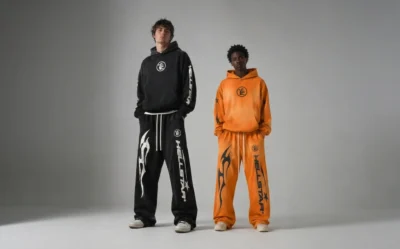
The difference is not only about the artwork; it is also about how the clothing communicates visually. Streetwear has always involved identity, with people using clothing to signal interests, communities, music, creativity, and personal taste. Hellstar’s aesthetic is particularly strong in this area because the graphics are rarely quiet. The clothing can communicate a mood before the wearer says anything.
Dark colors, dramatic artwork, oversized proportions, and strong typography can create an immediately recognizable presence. That is why Hellstar works especially well for people who prefer expressive streetwear. It does not require a complicated outfit; one strong piece can establish the entire look.
Is Hellstar Better Than Other Streetwear Brands?
There is no objective answer, and that is also not really the right way to look at streetwear. Stüssy has a different history, Supreme has a different cultural identity, and Represent approaches streetwear through a more polished, luxury-oriented direction. Other brands focus on skateboarding, vintage graphics, technical clothing, minimalism, or high-fashion influences.
Hellstar occupies its own space within that larger landscape. Its strongest characteristics are its graphic identity, dramatic visual language, relaxed silhouettes, coordinated categories, and contemporary drop culture. If those are the qualities you want from streetwear, Hellstar may feel more distinctive than a brand built around understated design.
If you prefer minimal branding or heritage-focused clothing, another streetwear label may suit you better. The value is in understanding the difference rather than assuming one brand is automatically superior.
How to Choose Between Hellstar and Other Streetwear Brands
The easiest way to choose is to start with your personal style. Ask yourself what you want your clothing to communicate.
Choose Hellstar if you like:
- Oversized and relaxed silhouettes
- Large graphic designs
- Dark or dramatic visual themes
- Statement hoodies and T-shirts
- Coordinated sweatpants and shorts
- Strong branding and recognizable artwork
- Contemporary streetwear aesthetics
Look toward heritage-focused brands if you prefer:
- Classic streetwear graphics
- Skate and surf influences
- More understated everyday styling
- Long-established streetwear culture
Consider luxury-influenced streetwear if you prefer:
- Refined silhouettes
- Premium wardrobe basics
- More controlled branding
- Cleaner outfit combinations
- A stronger connection between streetwear and contemporary luxury
The best choice depends on what you actually want to wear.
Final Thoughts: What Really Makes Hellstar Different?
Hellstar streetwear stands out because it treats clothing as a visual statement. Its identity is not built around just one logo or one type of garment. The brand’s current collections extend across hoodies, crewnecks, T-shirts, bottoms, shorts, sportswear, accessories, hats, capsules, and other categories, while maintaining a recognizable graphic direction.
Compared with Stüssy’s long streetwear heritage, Supreme’s powerful logo-driven identity, or Represent’s refined luxury-streetwear approach, Hellstar feels more focused on dramatic graphics and visual impact. That is ultimately what makes the brand interesting.
Hellstar does not need to replace other streetwear brands. It represents another direction within the culture. For someone who wants a quiet wardrobe, its aesthetic may feel too bold, while for someone who wants clothing that immediately attracts attention, that boldness is exactly the appeal.
And that is probably the most important thing to understand about Hellstar: its difference is not simply the name on the label. It is the way the brand combines graphics, silhouettes, themes, and limited-release culture into a recognizable visual world.
In a streetwear market filled with brands competing for attention, Hellstar has built an identity that is difficult to mistake for something else.
If you’re buying Hellstar from a seller you’re not familiar with, it’s also worth knowing how to tell if Hellstar clothing is authentic before making a purchase.